If you go down to the docks today ….

If you go down in the docks today, you’re sure of a big surprise
If you go down in the docks today, you won’t believe your eyes
For every boat that ever there was
Will be there for certain because
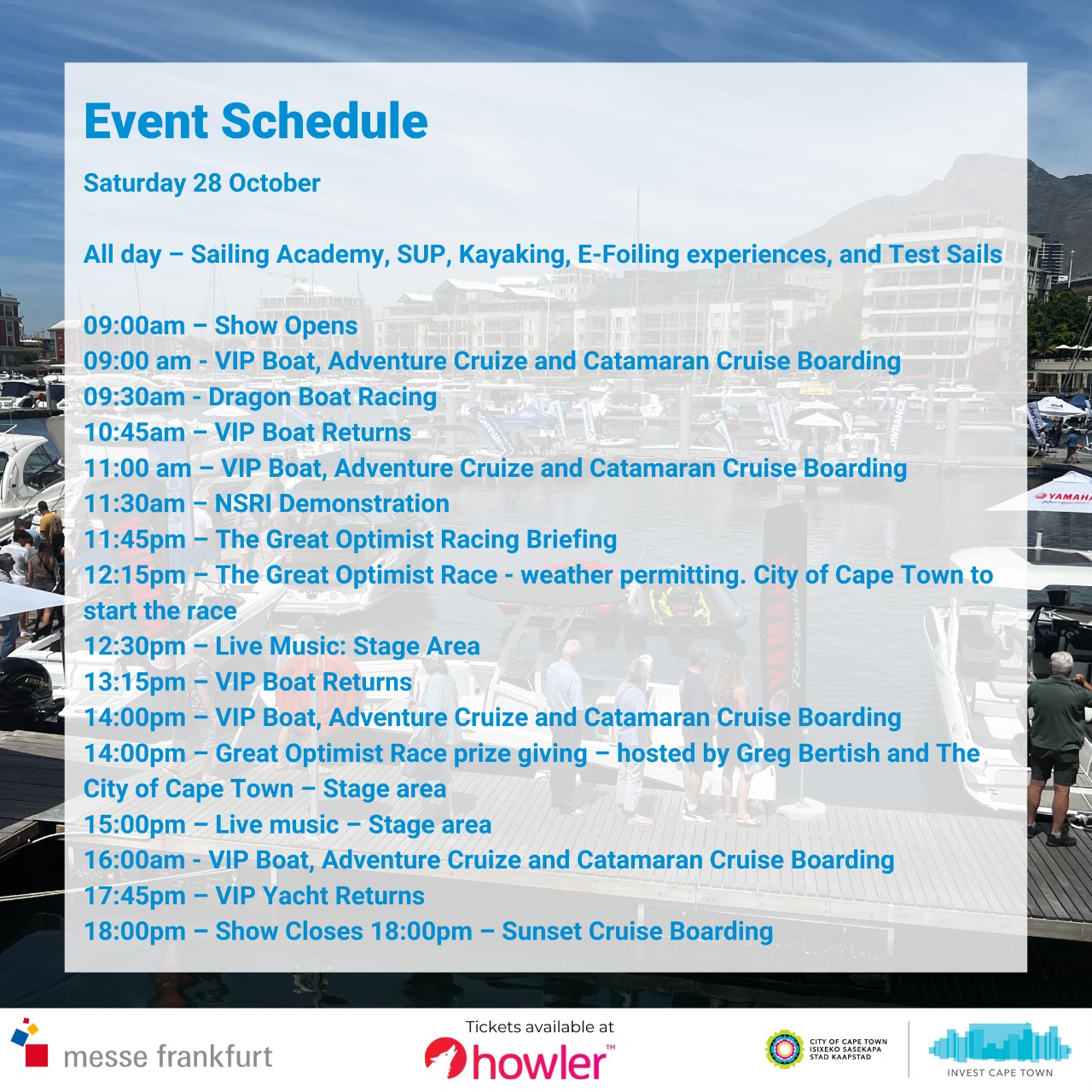
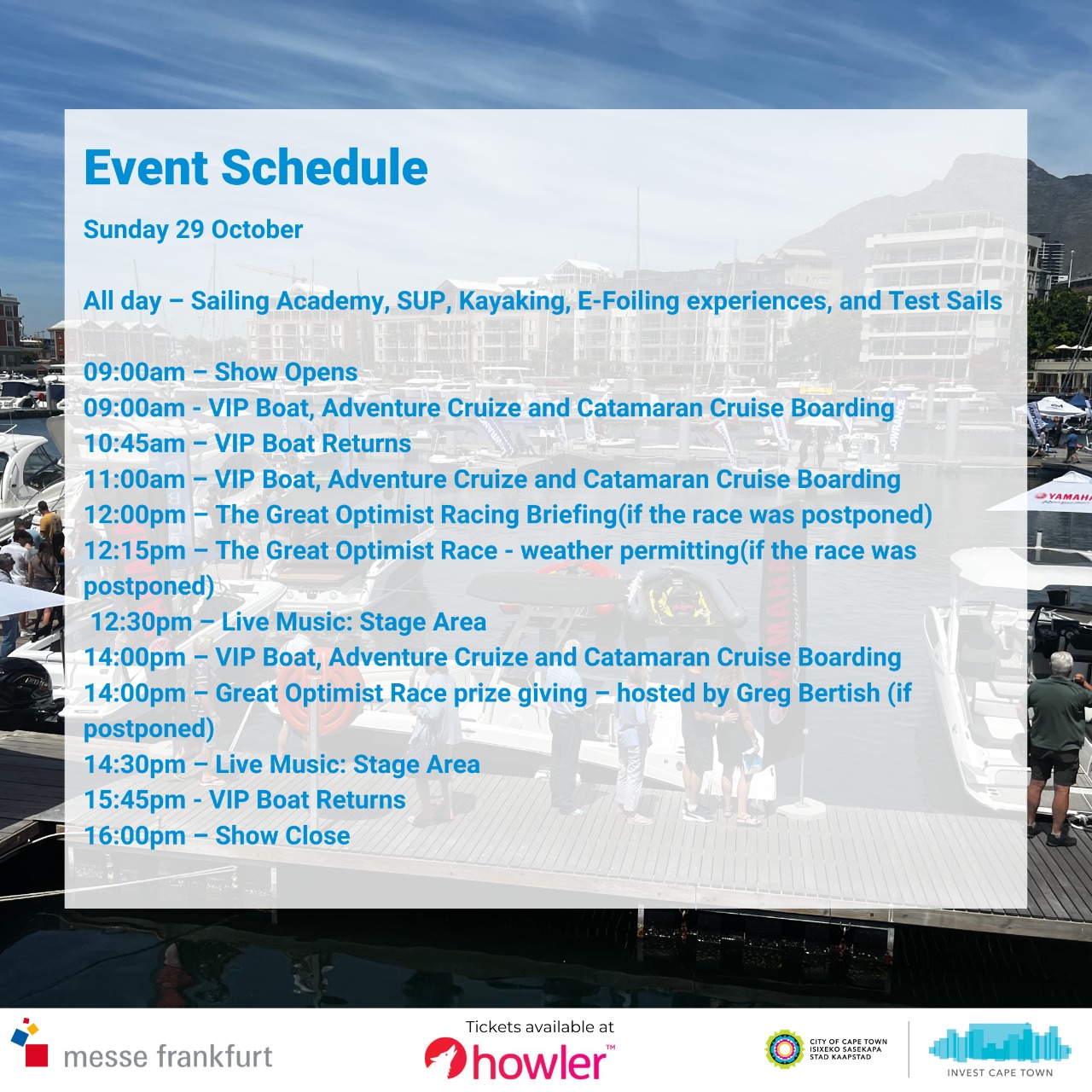
Today’s the day the waterfront hosts a boat show

boatica has loads to share
All are welcome for the next three fun filled days
Watch the action enjoy the fair
The boats and stalls will amaze

If you go down in the docks today, you’d better not go alone
It’s lovely down in the docks today, but nicer to share not on your own
For every boat that ever there was
Will be there for certain because
Today’s the day the waterfront hosts a boat show


Apologies to Henry Hall, the original writer of the Teddy Bear’s Picnic, but I immediately thought of it today when I woke up – thinking it would be apt given the excitement around the boatica show that opens in the V&A Waterfront today.

After last year’s bumper edition that launched a number of new vessels, I was sceptical that this year’s show could compete, but WOW! Last year we saw a number of newly designed catamarans test the waters and this year sailing is taking centre stage with a number of new yachts on display.

But cat enthusiasts won’t leave the show disappointed as there is at least one new cat being launched as well as many of the luxury catamarans that have put the Cape on the map as a premier destination for catamaran purchasers worldwide.

So – if you go down to the docks today, you’re in for a great surprise!

Managing your maritime message (Part 1)

Five tips for your maritime website

As a maritime journalist I often trawl maritime websites for news and insights that could spark a good story or initiate a discussion within the industry. While there are some amazing examples of professional-looking sites, there are also some very dismal ones. These inferior sites not only give the companies that they represent a bad reputation, but also impact on the overall standing of Africa’s maritime industry within the international community.

With this in mind, I thought I would provide a quick list of five tips for those in charge of managing their company’s maritime message.

ONE | LORUM IPSUM – GET RID OF PLACEHOLDER TEXT

Yes, you won’t believe how many sites have placeholder text on sections of their website where the company is still possibly curating appropriate content or has forgotten all about it. While this is moderately acceptable when you are first setting up the website, ideally any page that includes this text should not be accessible to visitors.

TWO | MENU – MANAGE YOUR MENU

That brings me to the second tip. The tabs in your menu need to make sense and open existing pages. I often visit sites where links on the menu do not work and produce error messages. Of course, this can be a result of a technical issue, but when the tab is permanently malfunctioning or simply pointing you back to the HOME page, it can be rather annoying.

Similarly, I have yet to work out why some websites (most notably government departments) use more than one menu tab to point you to the same news. This clutters your page and could easily be consolidated under one tab.

THREE | NEWS – NEWS IS NEW

Well, this is a personal bugbear. Do not include a NEWS page on your site if you do not have the capacity to update it regularly. Many companies and organisations start off with lofty ideas of ensuring that their NEWS page is constantly updated but, over time, realise that this is not a core function for anyone in the company. As a result, the items on the page are outdated and reflect poorly on the overall message that the site should be conveying.

If you are resolute about wanting a NEWS page, aim to ensure that there is someone in your organisation that has the capacity and the experience to sniff out the newsworthy stories as well as the time to keep the page updated. Alternatively, hire a PR company to do this on your behalf with targets on how many stories you want to add and when.

A caveat to this could be the creation of a BLOG page as opposed to a NEWS page. This is a far safer bet for those who may not have regular news items to share, but do want to include some company insights and updates on their website.

FOUR | DATES – WHEN DID IT HAPPEN

Perhaps even a worse sin than not keeping your NEWS page updated is not including the date on which your story was posted. When a visitor has absolutely no idea of when this great piece of news unfolded, they are less likely to share it, and I will certainly never use it as a news item on the magazine’s website.

This is such a simple thing to remember, but I am astounded by how many companies simply post news with no mention of when it happened.

FIVE | SOCIAL SHARING – BE SOCIAL

In a similar vein to the news updates, companies that link their page to a social media platform that is inactive are really not taking full advantage of what these platforms can provide. Rather shut down inactive social media platforms or investigate how you can maximise them to share your maritime message.

[Oops – I better take my own advice and ensure the magazine’s Instagram page gets a bit more attention!]

An ad-hoc approach to your maritime message is not the best way to maximise your maritime message

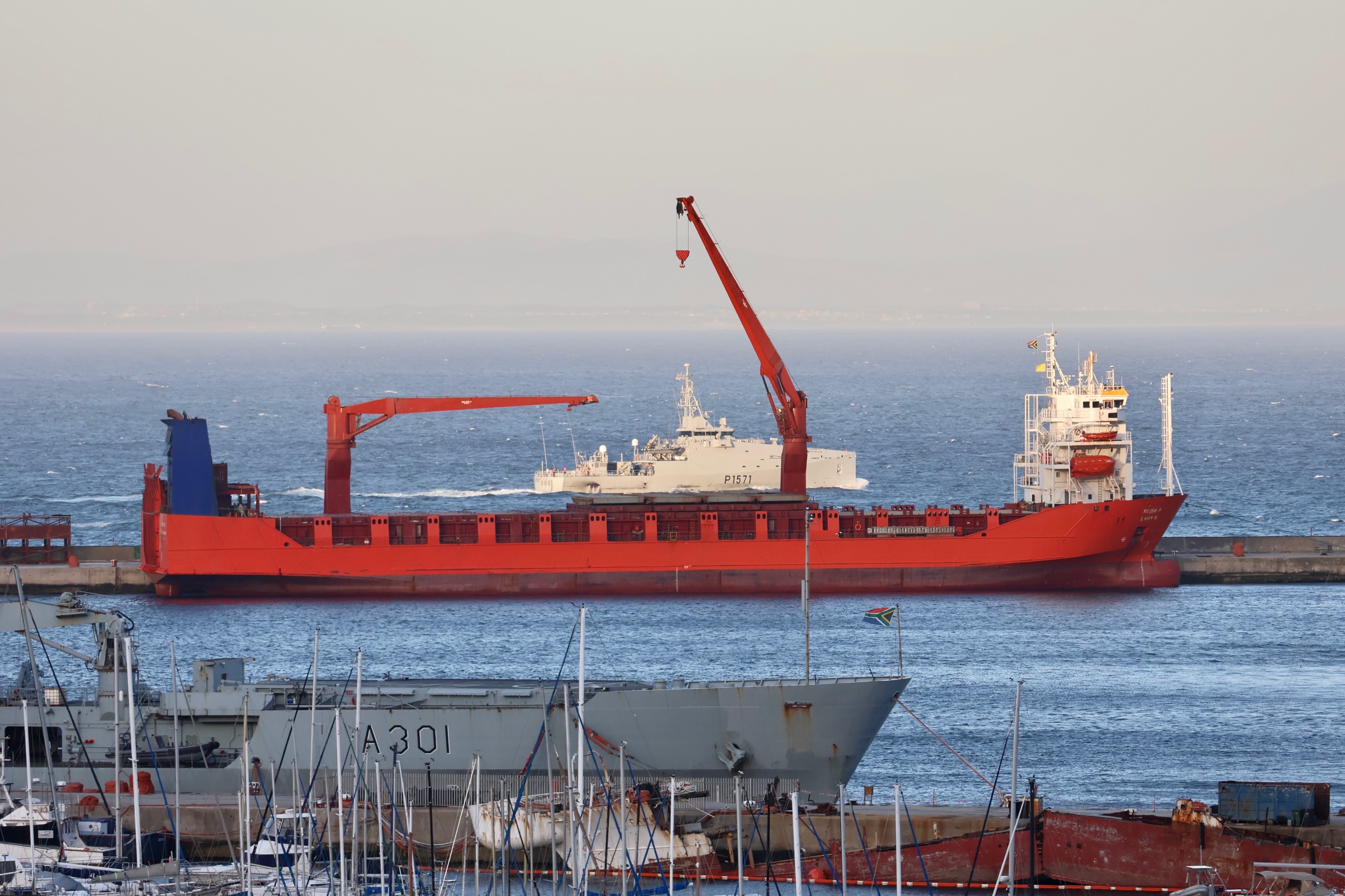
Lady R – Lady in Red

The Lady R berthed in Simon’s Town (Photo: Hugo Attfield)

Following the conclusion of the investigation into the Lady R – the vessel that attracted so much attention when she docked at the South African Navy’s base in Simon’s Town – I decided it was fitting to re-script Chris de Burgh’s iconic song Lady in Red to fit the circumstances.

The Lady R – Lady in Red

We’ve never seen a ship berthing as she did that night,
We’ve never seen one ignite such a fight,
We’ve never seen so many give a ship more than a glance,
They’re looking for info in advance, given half a chance,
And we’ve have never seen a ship so daring,
To visit the naval quay or catch so many eyes,
Have we been blind?

The Lady R came in from the sea, to the navy,
Hoping no one would see, just to come and flee,
It’s not where she should be,
We don’t know this vessel on the quayside,
No AIS like she had something to hide.

We’ve never seen a ship spark such public debate,
We never saw her freight, it was amazing,
We’ve never seen so many people get that irate,
We watched it escalate, it took our breath away,
And we’ve have never had such a feeling,
Such a feeling that the visit was about more, despite what they say;

The Lady R came in from the sea, to the navy,
Hoping no one would see, just to come and flee,
It’s not where she should be,
We don’t know this vessel on the quayside,
No AIS like she had something to hide.

An invitation

Most of us never get the opportunity to engage one-on-one with the international maritime leaders. We may meet them in passing at an event or even request a quick photo opportunity with them – but we don’t really know who they are or what makes them function the way they do within their roles.

Tomorrow I have the opportunity of engaging with Amb Nancy Karigithu – Africa’s candidate for the position of Secretary General of the International Maritime Organisation. And I am inviting everyone to join the conversation ahead of this month’s election process.

We are not only going to be discussing her ambitions for winning the election, but are really going get to know the woman who has been at the forefront of Kenya’s maritime sector for many decades. We will invite our audience to participate in the conversation and ask questions; to listen and understand the candidate on a more visceral level. Our conversation is not going only going to be about the mechanics of the maritime domain or about the bullet points of her campaign, so grab a cup of coffee tomorrow morning and join the conversation. Let’s really get to know the woman who could become the first African and first lady at the helm of the International Maritime Organisation.

JOIN THE CONVERSATION HERE

An enabling environment

There is a lot of talk around creating an enabling environment within the maritime industry to foster growth and inclusivity. In this context we view enablers as positive drivers. But, as we approach International Day for Women in Maritime, we need to be cognisant of another type of enabling environment – one with devastating consequences.


TRIGGER WARNING: This blog discusses issues of sexual assault, bullying and harassment.


You see – the reality of abuse, bullying and sexual assault is that it relies on an enabling environment where silence allows perpetrators to continue even when their actions are known or at the very least suspected.

Recent revelations by women around the globe across industry sectors prove this. Every serial abuser is surrounded by enablers; people who are willing to simply ignore or are actively complicit in the situation and who do not speak out against it. While sentiment is shifting, the subject is still taboo within many circles where gender stereotypes fester.

The living conditions on board vessels amplify the problem. Unlike shore-based professions where victims of abuse can return to the safety of their homes at the end of the day – at sea they are forced to live, eat and sleep within reach of their persecutors creating an optimal environment for the abuse to continue. It is within this environment that many choose to turn a blind eye to what must be somewhat evident. 

Trained to accept the status quo

In addition, based on some of the incidents that are now being reported, it is during cadetships and training that many women appear to be most vulnerable. As young women they find themselves working within an environment where they are outnumbered and outranked by men. Sadly, it is within this crucial part of their journey towards becoming career seafarers that they are often exposed to harassment and even assault.

According to one survivor, who is now involved in turning the tide on such incidents, these incidents often result in women leaving the sector or rethinking their ambitions of a life at sea. She believes that this developmental stage of seafarer careers needs to be addressed and acknowledges that many men are also bullied back to shore.

The result is that those men and women that should be at sea and who would generally be less likely to become perpetrators are the ones being forced out by this unreported criminal behaviour. It’s a Catch 22 situation that provides an enabling environment which allows the perpetrators to rise within the ranks while others are weeded out.

The young TNPA (Transnet National Ports Authority) cadet, Akhona Geveza was just 19 in 2010 when she died while serving on board the Safmarine Kariba. Speculation at the time around her cause of death highlighted the vulnerability of young men and women at sea as claims arose about how several cadets in South Africa’s maritime studies programme were subjected to “systematic abuse of power by senior officers, who threatened cadets’ careers if they did not perform sexual acts”. (Reported in a Sunday Times article at the time)

Difficult reports

According to Safer Waves, an organisation that was established in 2019 to provide support to merchant seafarers, there are many indications that shipping companies and senior officers continue to mishandle allegations of abuse that are reported to them.

“There is plenty of anecdotal evidence of seafarers being given poor advice, being ignored, being made to feel worse, authorities failing to investigate alleged sexual violence, victims being transferred off of ships rather than removing the offenders, and cover-ups between officers. Unsurprisingly then, victims often keep their experiences to themselves,” they contend.

In an industry where 25 percent of surveyed women state that physical and sexual harassment is common on board vessels it becomes vital to vocally address this enabling environment. This statistic, as revealed in a survey undertaken by the Women In Shipping & Trading Association (WISTA), should be highlighted alongside the reality that 66 percent of women indicate that they have been intimidated by male co-workers while serving at sea.

Seeking help while still at sea can be difficult, especially within an environment that is by its very nature not conducive to protecting the needs of those at risk. Imagine having to report an incident within a system that values obedience and the hierarchal structure of ranks. Imagine having to continue living in this environment until at very least the next port – in close confines with the person who is responsible for your trauma as well as those who would rather turn a blind eye to the situation in order to maintain the status quo.

It is no wonder that most prefer to report incidents anonymously via email or hotlines. Sadly, this continues to shroud the victims in unwarranted shame while those at fault remain largely unscathed.

Standing up and speaking out

But the tide is turning. Organisations such as Safer Waves as well as the many seafarer welfare and women’s associations are helping move the conversation forward. More importantly, victims are beginning to speak out and hold those that are guilty of abuse accountable – oftentimes decades after the incidents occurred.

Midshipman X took a bold stand by coming forward publicly to denounce her treatment as a cadet on board a Maersk vessel. Others too are adding their names to the list – and one can only wonder whether the increased openness to have these kind of conversations may have saved South African seafarer, Geveza if we had been more proactive much earlier.

Because the truth is you know someone. You know someone that is both the victim and the perpetrator. You may not know exactly who they are, but trust me they are within your professional circle. This means that we all have to make a choice to stand up and dismantle the environment of enablers.

Seemingly innocent remarks that diminish the agency of any rank, gender or other minority at sea should be unacceptable within our midst. It is our responsibility to develop the courage to stand up when we see or hear about incidents.

Become dismissive

The old ethos of “what did she expect”; “women don’t belong at sea” or any other diatribes that shift the blame from the perpetrator to the victim need to be dismissed. What a woman wears or where she finds herself within any profession cannot be used to explain away the behaviour of abusers. It is time to stop policing women and rather educate men and boys about their responsibility to behave like decent human beings.

Many of those that speak out do so in an attempt to save future generations and other women serving with their perpetrators. Most do not receive any real catharsis from doing so and certainly there is rarely much of a fallout for those who continue to take advantage of their position at sea.

One can only applaud SAMSA’s (South African Maritime Safety Authority) decision to host a gender based violence seminar in November last year. Although more than a decade after launching the local national cadet programme, the seminar gave a voice to the ongoing problem. In addition, educational information was distributed by the Authority in the month prior to the event.

Redesigning the future

It is, however, rather ironic that so many of our youngsters face harassment during their training at sea when it is precisely the right type of training that could ultimately reduce such incidents and improve the life of men and women at sea. I had the privilege of sitting down with Ann Pletschke – a volunteer at Safer Waves for a cup of coffee recently, who is herself a survivor. She would like to see this type of education formalised within the existing structures of STCW and other training conventions that focus on safety at sea.

This is a cause that she aims to see addressed as training evolves. She also highlights that the variety of jurisdictions that seafarers operate within provide additional difficulties. While some jurisdictions state that sex can be consensual at 14 – others increase the age of consent to 16 or even higher. Of course non-consensual sex (rape) is not legal at any age, but perpetrators making a claim of consent are open to cherry pick their jurisdiction in some cases.  

So – as a society and as an industry we need to ask what we are teaching the next generation when we continue to remain silent. To remain silent is to enable and this is one enabling environment that we should all seek to eradicate.


READ THEIR STORIES IN THE MEDIA:

“There are more than 50 young, strong, amazing women in my class at the U.S. Merchant Marine Academy where I am currently in my Senior/1st Class year. I have not spoken to a single one of those women who has told me that she has not been sexually harassed, sexually assaulted, or degraded at some point during the last 3 years at the Academy or during Sea Year. Most people, and even the leaders of our school, do not seem to understand how serious this problem is, especially at sea. In our class of approximately 50 women, I know of at least 5 women who were forcibly raped during Sea Year. And I am one of them.”

The high-profile case of Midshipman X who dropped her anonymity and revealed her identity as Hope Hicks received much media coverage with the legal case being settled towards the end of 2022 for an undisclosed amount. The accused in this case also faced some consequences.


FOOTNOTE: While writing this blog I was struck by my own internal voices warning me about taking such a strong stand within a male-dominated industry. I was concerned about being seen as another vocal woman beating the “fashionable” drum of inequality and abuse of power. I did not want to be seen as “that woman”. The fact that I am concerned at the reaction of men to this blog, however, speaks volumes about the environment we find ourselves in. The fact that many may ask about the need to dredge up old news such as that of Akhona Geveza should also be seen as a kneejerk reaction to maintain a status quo that benefits no one in the long term.

Equally, I am aware that “not all men” are guilty and that women themselves can be bullies and abusers – but that does not mean we should silence the very real narrative that abuse continues on board vessels within a career that we are promoting to young men and women.

Join the great debate

Logos are being suggested and talk about creating a National Shipping Line for South Africa is ongoing, but not without some dissenting voices. And, to be honest, it’s not a new debate.

Since losing the iconic Safmarine brand and the pride associated with owning the pristine Big Whites, as their containerships were affectionately known, South African maritime stakeholders have been divided about whether the advantages of a State-owned shipping line outweigh the challenges.

Even ChatGPT gave me a rather watery response when I asked the question.

For this reason I am inviting you to join our April Maritime Industry Dialogue to have a formal debate on the subject. I encourage you to apply to be on the panel for or against this development. Normal rules of debate will apply and we will open voting to the audience to determine which side has the most support at the close of the session.

Voting will be anonymous to promote the freedom to express one’s views without prejudice.

Since our usual slot for the Maritime Industry Dialogue sessions falls on Freedom Day, we will be scheduling the debate for 26 April at 15:30.

click here to: REGISTER TO ATTEND THE DEBATE AND VOTE

click here to: APPLY TO BE ON ONE OF OUR DEBATE TEAMS

I asked ChatGPT about starting a National Shipping Line

With all the hype around ChatGPT internationally and the local debate about whether or not South Africa should start a national shipping line, I thought I would test out GPT’s intelligence and pose the question.

For those of you who may have been hiding in the engine room of a ship somewhere and have not yet heard about ChatGPT, it was launched in November last year and is designed to provide “articulate answers across many domains of knowledge” according to Wikipedia. I have heard from some individuals that they are using it to create speeches and assist in the writing of research papers.


So I decided to pose the question: Should South Africa launch a National Shipping Line?

THE ANSWER

Whether or not South Africa should launch a National Shipping Line depends on a variety of factors, including economic conditions, the country’s strategic goals, and the potential risks and benefits. Here are some factors to consider:

Pros

  • South Africa is an important trading nation and a National Shipping Line could provide the country with greater control over its shipping operations, ensuring the safety and quality of its goods, as well as setting competitive shipping rates.
  • Launching a National Shipping Line could create jobs for South African citizens and stimulate economic growth.
  • A National Shipping Line could help to reduce the country’s dependence on foreign shipping companies and increase national pride.

Cons

  • Starting a National Shipping Line can be expensive, with high start-up costs for ships, ports, and other infrastructure.
  • The shipping industry is highly competitive and volatile, with unpredictable demand and fluctuating freight rates, making it a risky investment.
  • Established shipping companies may already have a stronghold on certain routes, making it difficult for a new National Shipping Line to compete.
  • Political interference could lead to inefficiencies and potential corruption.

Overall, whether or not South Africa should launch a National Shipping Line depends on a thorough analysis of the costs, risks, and potential benefits, as well as a clear strategy for success. It may be wise for the government to consult with industry experts and stakeholders to make an informed decision.


While this all took only a few minutes to generate and the information is obviously accessible on the internet somewhere, the ChatGPT service does not indicate any of the sources of its information. For me, as a journalist, this is somewhat problematic for a number of reasons.

Firstly – it is important to know the source of information in order to make an informed decision as to whether you believe it to be accurate and factual.

And, importantly, the information that GPT digs up may be protected by copyright laws and using it may expose you to potential infringement suits.

Nevertheless, GPT may serve as a good port of call for obtaining basic information from which to launch a more indepth investigation into matters that require critical interrogation and where the nuanced data is not required.

It just does not fly with me

News this month that Cape Town’s Mayor Geordin Hill-Lewis was aiming to drive the city’s position as the Gateway to Antarctica is great – but the fact that it is being promoted as a “day trip” from the Mother City just does not fly with me.

In just five hours tourists can touch down in Queen Maud Land having joined a flight in Cape Town. Is it just me – or does this kind of defeat the object of travelling to one of the poles? It’s not supposed to be this easy. It’s not supposed to be accessible to the “instant gratification” types who will simply haul out a wallet to notch this up as an experience on their idealised bucket list.

They will not fully appreciate the distantness of this remote setting. They will not experience the icy seas and oceans that prevent many from reaching this destination. They will not be holed up on a small speck in the ocean in a daring effort to reach the ice.

While I appreciate that flights are shared between visitors and the scientific community, reducing environmental impact and supplying logistical support for scientists at research bases operated by several countries, including South Africa – it still seems at loggerheads to what getting to a remote destination should be about.

The mayor’s quote from press releases acknowledges that witnessing the “Antarctic’s pristine wilderness first-hand” is a privilege. Perhaps it’s just me, but I believe that it should be a privilege for those who are willing to set sail and earn their right to claim a footprint via an ocean expedition.

“Visiting the world’s remote seventh continent is the closest anyone will come to experiencing life on another planet,” notes the mayor without acknowledging that this is like taking the space out of space travel.  

Sadly I do see this as the way that tourism and exploration is heading – and am slightly jealous that I was not whisked down to the ice. Yes, I realise the hypocrisy in this, but fortunately I have not been tempted to test my lofty convictions.

ACCESS DENIED:

Rocking the boat

As part of a four-ball of relative novices, I was asked not to be offended by the decision not to allow us to participate in the upcoming Fairship General Botha Old Boys Bursary Fund fundraising golf day.

Having previously addressed the fact that industry golf days, by their very nature and legacy, tend to remain rather male dominated with the board of the Bursary Fund, this decision came as a bit of a surprise – given that the four ball in question happened to include four women.

We were assured, however, that the marketing efforts for the golf day had reached out to women’s golfing groups and to the ladies belonging to the Rondebosch Golf Club where the event is being hosted.

That they had to find non-maritime women for an industry golf day does not seem to have made a dent in their thinking. According to the correspondence from the Bursary Fund and the manager of the Golf Club – there was not much interest shown despite their efforts to create a more inclusive field via these channels. That the women which were targeted in these marketing endeavours do not want to sign up for a stereotypically male dominated industry golf day also seems to be beyond their understanding of some of these nuances.

As a group of lady novices keen to have some fun at a golf day aimed at raising money for the future maritime generations – a golf day with sponsored holes aimed at making the game less serious, we have been advised to rather not participate lest it destroys our potential longer-term love of the game. In fact, the club manager has already decided we would NOT enjoy ourselves. The capitalisation of the word is her emphasis and not mine. Instead – she has advised us to embark on a more structured approach that includes the expense of coaching, lessons and mentorship.

Personally – the idea of the golf day sounds a hell of a lot more fun as well as a fundamentally better introduction to the game than the latter advice.

Apparently the “suggestion” to prevent us from teeing off is “not intended to exclude anyone and hopefully not discourage the eager and brave souls from ever trying golf”. I do hope that the intention now is to ascertain whether any of the other “souls” signed up for the golf day are novices and exclude them as well.

Yes, we are certainly novices and no we do not own our own clubs, but the correspondence also makes the assumption that none of us have had any exposure to the game – a fact that neither the Bursary Fund nor the manager cared to clarify. Personally, I have been on a driving range; I have played a short round with some experienced golfers, and I have co-organised several industry golf days back in the day.

During these golf days I spent the majority of the day riding around in a golf cart, photographing and engaging with players – followed by assisting with the prize giving and engaging with the score cards.

It was through the organisation of these golf days that my reservations about hosting such events materialised. The number of women from the maritime industry that played over the course of several years could be counted on one hand. Each event turned into a male bonding fest that effectively discouraged inclusivity.

Having been asked to engage with the Bursary Fund previously about how to move their brand into the future and maintain a relevance for the next generation of maritime professionals, I voiced this exact concern, but did suggest that they at very least include a prize for the top lady player. Not even this hit the mark with their organising committee.

I was told that these events remain the easiest and best way to raise money. Yes, raising money for maritime bursaries is certainly important, but what happened to our commitment to make the industry more cognisant of creating an inclusive environment?

Given this lack of inclusivity, I am rather astounded at the nature of the correspondence received to inform us of their decision, which is inherently condescending in its nature – offering us the opportunity to come out on the day and be taken out “briefly” on a golf cart. The email also goes as far as to say: “I trust that this does not offend any of your team and that it will be taken in the positive spirit intended”.

My answer to this is quite simply: yes, it does offend, but us taking offence is almost irrelevant to the broader picture here. A more “positive spirit” could have been engendered had either the board or the club reached out and made suggestions to accommodate us rather than simply telling us to get ourselves together and try again next year.

Perhaps suggesting that we tee off last so as not to impact the field; or to split our four ball into two and look for four more experienced players to join each four ball (more four balls – more money for the fund) could have indicated a rather more positive response.

I dare say that there are many other creative suggestions that could have come to mind had they thought further than protecting “the sport that they both love” with the word no!


Interestingly, their Instagram account seems to indicate that you are welcome whether you know how to play golf or not.

It’s time to speak up

Today’s email download included information about a new initiative launched by WISTA International and the International Maritime Organisation that I believe will help diversify the voices that get heard in the maritime industry.

The two organisations have created a new platform, a speaker bank for the women in maritime, intending to end the tradition of all-male speaking panels, sometimes referred to as ‘manels’. I do hope that the vibrant women from Africa’s maritime domain add their voices to this platform.

The Maritime Speakers Bureau is a great initiative and I will definitely be signing up to use the opportunity to register as a speaker as well as to identify potential speakers for future events.

The aim is to promote increase the number of women speakers on the international conference stage. According to a statement issued by WISTA International, “This will show more diverse role models and eliminate the excuse that “I cannot find a female speaker”; and simplify the process of finding speakers. It is free to register and use by speakers and organisers.”

The platform also includes a pledge for signatories to help highlight where diversity gaps occur as well as to commit to improving the inclusion at future maritime events.

“Creating this platform in collaboration with the IMO is a fantastic opportunity to help the wider maritime sector attract more diverse talent in an international industry. Women in our industry will be able to show their interest in participating in panels, becoming more visible and inspiring others. At the same time, event organisers will have the tools to make their panels more inclusive, diverse and interesting,” notes Despina Panayiotou Theodosiou, President of WISTA International.

Secretary-General of the IMO, Kitack, Lim believes that the initiative will support inclusive, diverse, richer panels from this free-to-use directory of industry speakers so that audiences can benefit from a range of perspectives that come from having  diverse and inclusive viewpoints.

Visit the website now and sign up!